Meshtastic: Resilient Off-Grid Communication for the Modern Explorer
Stay connected when the world goes off-grid. Meshtastic lets you send messages anywhere, no towers, no internet, no “middlemen”. Handhelds, solar nodes, and multi-hop mesh keep your family, friends, and community linked, even when everything else fails. Build your network. Expand your range. Own your communication.
NeanderPaul
1/23/20264 min read

Meshtastic: Resilient Off-Grid Communication for the Modern Explorer
Meshtastic is an open-source, decentralized mesh communication system that lets devices send messages directly to each other using LoRa (Long Range) radio. Unlike cellular networks, it doesn’t rely on towers, internet backhaul, or centralized servers, making it ideal for off-grid adventures, emergency preparedness, or resilient communications in areas with poor coverage. From a personal perspective, this is exactly the kind of system one would carry on long hikes, remote field tests, or experiments where they can’t trust cell coverage, or live in remote locations or under off-grid conditions. The idea that someone can still check in with a team, even when miles away and out of line of sight, is exactly why Meshtastic excites me.
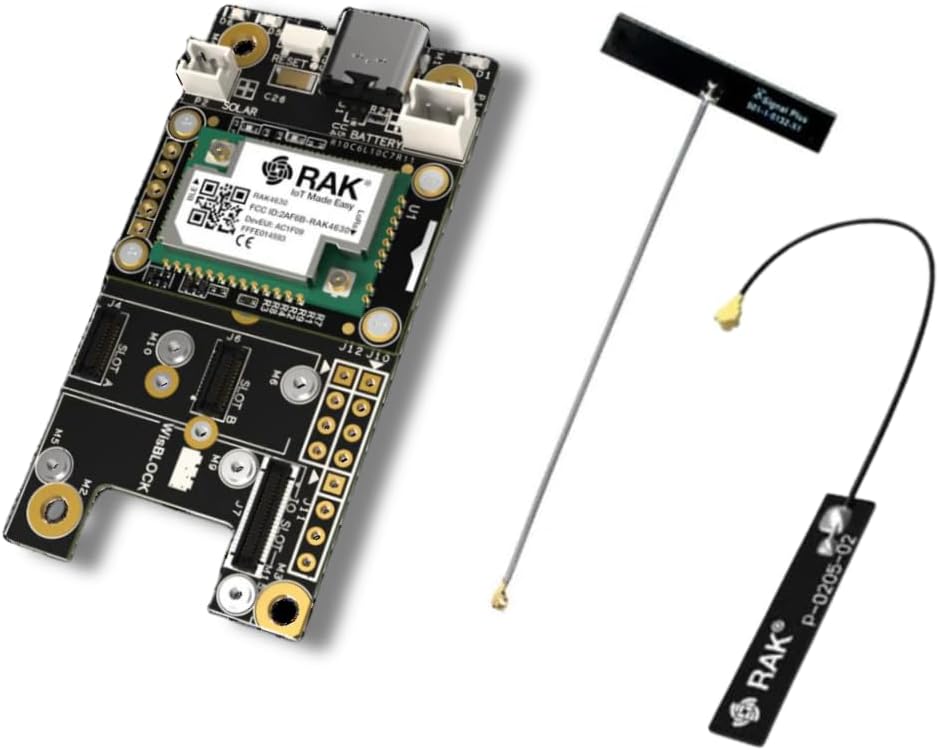
Meshtastic works by pairing low‑power LoRa radios with compact microcontroller boards running custom open‑source firmware. Early builds centered on ESP32 devices, and they’re still a favorite for DIY experimentation (The ESP32 is a NeanderPaul favorite go-to microcontroller!), but the ecosystem has expanded to include more efficient nRF52‑based boards that offer dramatically better battery life. Regardless of the platform, each node automatically becomes part of the mesh, relaying messages without phones, towers, or any external infrastructure. That’s the magic for me: a pocket‑sized network you can build, tune, and stress‑test entirely on your own terms, whether you’re deep in the woods or running controlled experiments in the lab.
Real-world performance is surprisingly robust but depends on terrain and node density. Line-of-sight ranges are typically 2–10 miles, with multi-hop extending coverage further. Hills, forests, and urban clutter reduce effective range, but for off-grid adventures or local mesh communities, the system is more than adequate. Personally, I’d place nodes strategically along trails, remote camps, and vehicles, basically wherever we want coverage without relying on anything external. The possibilities for experimentation are endless: testing antenna designs, battery configurations, network scaling, and encryption strategies all become tangible projects.
What sets Meshtastic apart from cellular-based PTT devices, like Echo Radios, is true independence from infrastructure. Echo Radios may look cool, but once the towers go down, so does the system. Meshtastic, by contrast, works wherever nodes can communicate. For me, that’s exactly the kind of resilience that feels satisfying, knowing the network is ours, built for us, and survives the chaos that would kill other systems. If this became widespread, imagine a world where communities, search-and-rescue teams, hikers, and explorers could form real-time decentralized networks without needing cell towers. Messaging would literally become a property of the people, not the infrastructure.
Of course, there are limits: bandwidth is limited, sparse networks reduce reliability, and setup requires some familiarity with firmware. But these constraints are part of the fun from an R&D perspective. Testing, iterating, and improving a live mesh network is exactly the kind of hands-on challenge RevLab thrives on. That’s why, for me, Meshtastic isn’t just a tool; it’s a playground for resilience, experimentation, and creative problem-solving.
Building and Experimenting: Exploring the Lower Layer of Communication
At RevLab, we’re not just interested in devices; we’re interested in systems and networks. That’s why Meshtastic is so compelling: it’s not just a long-range messenger, it’s a platform for experimentation in decentralized, resilient communication. I want to build these nodes, deploy them, and observe how they behave in the real world, how signals propagate, how nodes relay messages, and how the network adapts to obstacles, interference, or sparse deployment. This isn’t theoretical tinkering; it’s hands-on testing of a living, evolving network.
The deeper vision is what excites me the most. Imagine if everyone had a Meshtastic device: suddenly, we’re not talking about isolated point-to-point communication, we’re talking about a webbed lower-layer network. Each device becomes a tiny router, a node that forwards messages automatically, creating a resilient, self-organizing mesh. In this web, information flows independently of traditional infrastructure. Towers, servers, and even the internet have become optional rather than required. Hikers in remote mountains, off-grid communities, and bikers on long trips could all be part of a dynamic, decentralized network. It’s infrastructure-independent communication at a scale that most people have only imagined in textbooks or sci-fi.
From an R&D standpoint, experimenting at this level is fascinating. We can test network density, determine the number of nodes required for reliable multi-hop routing, evaluate battery life under continuous operation, and explore how terrain, foliage, and interference shape message flow. Encryption, message prioritization, and node failures all become tangible experiments. Each deployment, no matter how small, teaches us something about the resilience and scalability of decentralized networks.
This is why I’m drawn to Meshtastic: it’s a sandbox for real-world experimentation, a chance to push mesh networking from theory into practice. And the bigger picture is thrilling: a low-layer communication network woven beneath the infrastructure everyone depends on. It’s not just a hobby; it’s a glimpse at what resilient, people-powered communications could look like if we built it, and if enough people participated, it could fundamentally shift the way communities stay connected when traditional networks fail.
Getting Started: How I Plan to Test Meshtastic
To bring all this theory into practice, here’s how I plan to start experimenting with Meshtastic in the real world. My first node will go in the “Revcyffe” tree, mounted alongside my Starlink setup. This will serve as a persistent, high-vantage-point node, acting as a mini solar-powered repeater for testing multi-hop routing and range in the immediate area.
Alongside this, I’ll carry a handheld device for myself to measure connectivity, observe latency, and verify message delivery across line-of-sight and slightly longer distances. Once I have this baseline working, I’ll introduce nodes gradually for each family member, letting us test local mesh coverage in our neighborhood and surrounding terrain. This phased rollout mirrors the larger experiment plan: starting small, collecting real-world data, and iterating.
In addition, I’ll scout networks while on drives, noting how the mesh behaves over longer distances, through varying terrain, and in areas with obstructions such as hills, trees, or buildings. Each observation will inform future node placement, antenna adjustments, and potential solar-powered deployments. The goal is to understand the limits and strengths of a local, family-level network while laying the foundation for a more robust, persistent mesh over time.
This approach allows me to combine hands-on experimentation, practical learning, and network scouting into a single workflow. It’s a way to test Meshtastic incrementally, gather actionable insights, and begin building the kind of resilient, lower-layer communications network that could scale further in the future, whether for family, friends, or community.
Check back later for updates!...